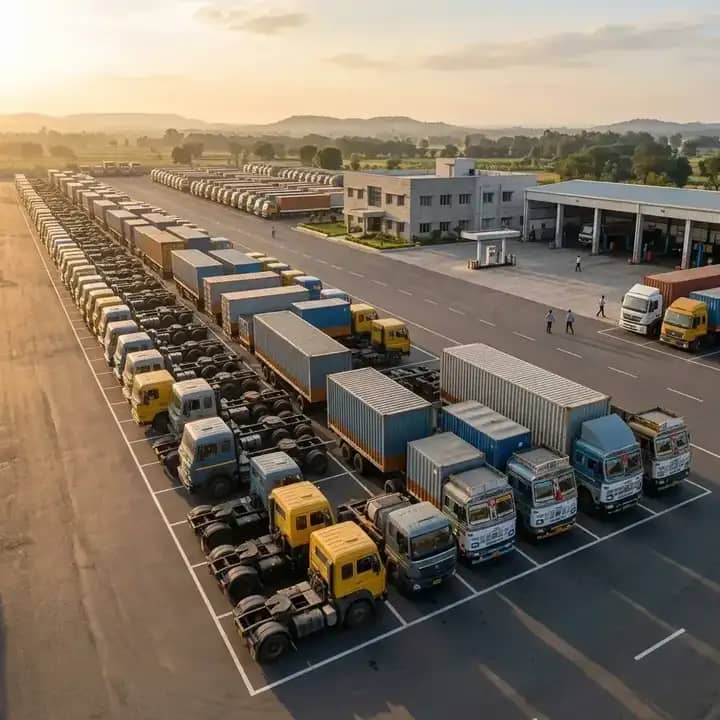
Fleet management is the discipline of keeping every truck, tipper, and trailer earning money. It means knowing where each vehicle is, what every driver is doing, how much fuel and maintenance each asset consumes, and which documents are about to expire — all before small problems become costly ones. This guide walks through the building blocks of modern fleet management and how FleetSetu turns them into one connected workflow.
What Fleet Management Means
Fleet management is the process of overseeing a company’s vehicles, drivers, trips, and operating costs so that every asset earns its keep. In the Indian transport context, that covers commercial trucks, tippers, trailers, buses, and light commercial vehicles — whether owned, hired, or operated on behalf of a customer.
At its core, fleet management answers three questions: where is every vehicle right now, when will it be available for the next trip, and how much did the last trip actually cost? When those answers are accurate and available in real time, a transport business can quote better, plan better, and grow without adding chaos.
- Vehicle acquisition, registration, and documentation
- Driver onboarding, licensing, and performance
- Trip planning, dispatch, and tracking
- Maintenance, breakdowns, and downtime
- Fuel, toll, and expense control
- Compliance with RTO, insurance, and permits
Why Traditional Fleet Management Fails
Most transport businesses still run on a mix of phone calls, WhatsApp messages, physical registers, and daily diaries. That approach worked when fleets were small, but it breaks as operations scale. The information lives in people’s heads and paper notebooks, so decisions are made late and on guesswork.
The biggest failure points are invisible costs: unplanned downtime because maintenance was forgotten, fuel loss because consumption is never compared with expected mileage, and disputes with drivers and customers because there is no audit trail of what actually happened on a trip.
- No real-time visibility — managers learn about problems only after the trip is over
- Maintenance is reactive, so breakdowns happen on the road at the worst time
- Fuel and toll expenses are recorded late and rarely reconciled against the trip
- Driver advances and payments are tracked in diaries, leading to disputes
- Compliance documents such as permits, fitness, and insurance expire unnoticed
Vehicle Tracking and Real-Time Visibility
Live GPS tracking is the foundation of modern fleet management. Instead of calling a driver to ask where he is, dispatchers see location, halt history, and speed on a dashboard. FleetSetu supports live GPS tracking across your existing hardware and OEM telematics such as Tata FleetEdge, Leyland iALERT, and Eicher E-PASS, so you do not need to replace devices — learn more in the fleet management solution.
Tracking data is equally valuable after the trip. Route playback, halt history, and mileage records build a factual history of every vehicle and driver. That history powers cost-per-kilometre analysis, resolves disputes with customers, and gives drivers a fair performance record.
- Live fleet position and ETA without phone calls
- Halt, detour, and speed alerts
- Route playback per trip
- Mileage and fuel-consumption history per vehicle
- Tracking links you can share with customers on WhatsApp
Driver Management and Safety
Drivers are the most important asset in any fleet, and also where the biggest control gaps hide. Cash advances, trip allowances, and fuel slips are easy to misplace when they live in a diary. A digital driver advance and expense ledger records every advance, allowance, and receipt against the trip it belongs to, so settlements are transparent and disputes disappear.
On the road, monitoring driving behaviour — overspeeding, harsh braking, unauthorized stops — protects both safety and fuel costs. Driver scorecards give owners a fair basis to reward careful drivers and coach the rest.
- Digital driver profiles with license and badge records
- Cash advance and trip allowance ledger
- Trip expense receipts linked to the trip sheet
- Driving-behaviour monitoring and scorecards
- No more “he said, she said” settlements
Vehicle Utilization
Most fleet owners own more trucks than they effectively use. Utilization — the share of time an asset is earning — is the single biggest lever on fleet profitability. A truck that sits in the yard burns interest, insurance, and depreciation without earning a rupee.
With a real-time vehicle availability view, owners see which vehicles are active, idle, in the workshop, or under maintenance. That visibility turns underused assets into capacity: the next load goes to the truck that is actually free, instead of the one someone remembers as free.
- Track vehicle status: running, available, workshop, scheduled
- Spot idle trucks that can take the next load
- Balance loads across vehicles instead of overworking a few
- Measure utilization per vehicle and per branch
Preventive Maintenance and Downtime
Breakdowns do not announce themselves. A missed oil change or a skipped brake inspection quietly turns a routine trip into a roadside emergency — towing, lost load, and a customer who will not forget the delay. Preventive maintenance replaces surprises with schedules: service intervals by mileage or engine hours, with reminders before parts fail.
FleetSetu logs service history, spare-part replacements, and mechanic bills against each vehicle, and triggers maintenance reminders automatically. The result is fewer breakdowns and repair costs that are predictable instead of alarming.
- Maintenance schedules by distance or engine hours
- Service history per vehicle
- Automated reminders before scheduled service
- Tire lifecycle and wear tracking
- Lower unplanned downtime and roadside costs
Fuel and Cost Control
Fuel is usually the largest operating cost in a fleet, and also the easiest to leak. Unauthorized refuelling, siphoning, excessive idling, and inflated slips all drain margin silently. The fix is measurement: expected fuel consumption versus actual, per trip and per vehicle.
FleetSetu’s fuel anti-theft telematics monitor tank levels and flag sudden drops, while fuel slips and card data are reconciled at the trip level. When every litre is accounted for, the monthly diesel bill stops being a mystery.
- Real-time fuel level monitoring with anti-siphoning alerts
- Expected vs. actual fuel consumption per vehicle
- Fuel slips and tolls linked to the trip ledger
- Cost-per-kilometre and cost-per-trip analysis
- Total cost of ownership per vehicle
Compliance and Documentation
Transport is one of the most document-heavy businesses in India. Insurance, national permits, fitness certificates, PUC, and RC all expire on different dates, and each lapse can mean a challan, an impounded truck, or a rejected load. Relying on memory does not scale past a few vehicles.
FleetSetu keeps every document in a central vault with automated WhatsApp and SMS reminders before expiry dates. Instead of discovering a lapsed permit at a check post, the owner gets a nudge a month in advance.
- Digital vault for insurance, permit, fitness, PUC, and RC
- WhatsApp, SMS, and email expiry reminders
- Zero RTO fines from missed renewals
- Audit-ready records for every vehicle
Reporting and Measuring Success
The metrics that matter in fleet management are utilization, cost per kilometre, unplanned downtime, fuel consumption versus benchmark, and on-time performance. A fleet that improves utilization by even a few percentage points unlocks capacity without buying a single new vehicle.
FleetSetu aggregates these metrics automatically. Branch heads and founders see profit-and-loss per truck, maintenance spend trends, and driver performance in one view — turning fleet management from a memory game into a data conversation.
- Vehicle utilization percentage
- Cost per kilometre and per trip
- Unplanned downtime hours
- Fuel consumption vs. benchmark
- On-time departure and delivery rates
- Profit-and-loss report per truck
How FleetSetu Helps You Manage These Operations
FleetSetu is built for the way Indian fleets actually run — a mix of owned trucks, hired vehicles, cash advances, and WhatsApp-first communication. The Fleet Management Software for Fleet Owners brings vehicle tracking, maintenance, fuel control, compliance, and cost analytics together, while the Transport Management Software handles the trip, dispatch, and billing side of the same operation.
Smaller fleets get the same control without enterprise complexity through the SMB transport solution, and heavy-asset businesses can extend the same discipline to rentals and equipment. Whatever the size, the workflow is the same: onboard the asset, keep it compliant, track it live, service it on schedule, and measure what it earns.
- Start with complete vehicle and driver master data
- Track every trip, not just the big ones
- Let the system flag expiries, overages, and anomalies
- Review fleet dashboards weekly and act on exceptions
A Day in the Life, Before and After
Let us compare two ordinary mornings in the same fleet — the first one manual, the second one digital. In the manual version, the day starts at 6:30 am with the phone already ringing. A driver on the Delhi run says the truck broke down near a flyover and needs a mechanic. Nobody knows the truck's service history, so the owner calls his usual workshop and hopes for the best. Meanwhile, the dispatcher is trying to find out which trucks are even in the yard this morning — by calling each driver and asking. By 10 am, two loads are waiting, one truck is stranded, and the office has already burned the morning on coordination.
Now the same morning, digital. The owner opens one screen over breakfast. The breakdown truck shows in red with a service record attached — last service was 3,200 km ago, overdue by a month. A different truck is flagged "available" and nearby, so the load gets re-assigned in three taps. The stranded truck's history goes straight to the workshop. Every decision that used to take phone calls and guesswork now takes a glance and a tap. Same fleet, same people — but the morning that used to be chaos is now just... routine.
Honest Questions Every Fleet Owner Asks
Every owner we meet asks roughly the same three questions, and they deserve straight answers. First: "Will my drivers co-operate?" Most drivers do, and faster than you expect — because the system gives them protection too, clear trip records that prove they were on time, and advances that are never "lost." The drivers who resist are usually the ones who were benefiting from the old chaos.
Second: "Will it work with the vehicles I already have?" Yes — that is the point. FleetSetu connects to existing GPS hardware and the telematics built into newer trucks, so you do not need to rip out anything. Third: "How long before I see the benefit?" In most fleets the first surprises show up within a month — an idle truck spotted, a document expiry caught early, a fuel anomaly flagged. The full payoff compounds over a few months, but the first proof arrives quickly.
The First Week: What to Expect
Here is an honest preview of the first week, so nothing surprises you. Day one is mostly data entry — uploading your vehicles, drivers, and documents into the system. Your team will grumble about it. That grumbling is normal, and it fades once they realize they only ever type these things once. By day three, the live map is up and the first real conversation happens: "Why is Truck 7 still at the yard? The load leaves at 4."
By the end of week one, a pattern emerges. Someone notices a document expiring soon that would have been missed. Someone spots a truck that has been idle for three days. The team stops treating the software as an extra chore and starts using it as a source of truth. If you want the transition to be smooth, do two things: assign one person to own the data quality, and commit to reviewing the dashboard for ten minutes every morning. That small daily habit is what separates fleets that digitize from fleets that just bought software.