
Downtime, fuel leakage, and missed renewals are the quiet cost-drivers in every fleet. Here is how fleet management software brings them under control.
Where Your Fleet Money Is Quietly Leaking
If you ask any fleet owner where their money goes, the answer is always the same three areas: diesel bills, maintenance repairs, and idle trucks sitting in the yard. In manual operations, money leaks through all three continuously.
Diesel slips get inflated or mislaid, routine oil changes get skipped until an engine breaks down on the highway, and trucks sit parked for days because nobody realizes they are ready for the next assignment. These losses rarely happen all at once — they are small leaks happening across every truck, every week, which makes them easy to miss unless you track them systematically.
Preventive Servicing vs. Highway Breakdowns
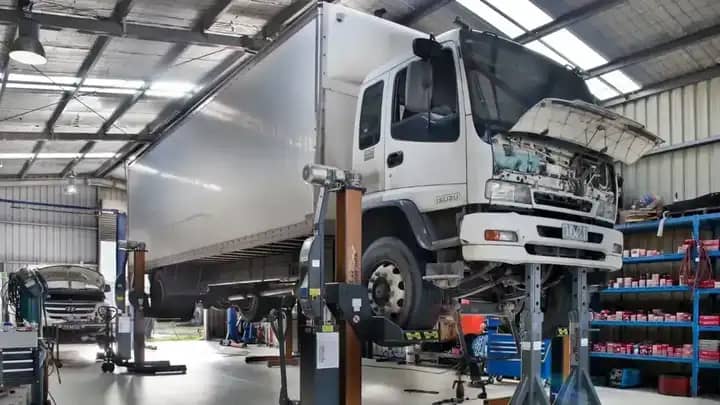
A roadside breakdown costs far more than just the mechanic’s bill. You face towing expenses, delayed customer shipments, driver overtime, and days of lost earnings while the vehicle sits in the workshop waiting for spare parts.
Preventive maintenance turns reactive repairs into scheduled, manageable tasks. By tracking mileage and engine hours, the system alerts you when a truck is due for servicing, oil replacement, or tire rotation before a breakdown occurs on the road. You can learn more in our dedicated fleet management guide.
- Set service schedules based on actual kilometres or engine hours
- Receive automatic reminders before servicing deadlines arrive
- Track tire wear, serial numbers, and replacement histories per vehicle
- Dramatically cut down on unexpected highway breakdown costs
Taking Control of Diesel Expenses
Fuel is your single largest operational cost, making it the most critical area to manage closely. Long idling hours, unapproved fuel stops, and overstated receipts can quietly eat away your operating margins.
Connecting fuel monitoring sensors and digital receipt logs allows you to compare expected fuel consumption against actual mileage for every trip. When every litre of diesel is tracked and matched with trip distance, unexplained fuel losses become a thing of the past.
Verifying Market Vehicle and Broker Payouts
When your transport business uses hired market trucks or sub-contractors to cover extra load volume, unverified distance claims and padded detention charges can quickly inflate your expenses. Without centralized trip verification, market brokers often bill for extra detour kilometres or unverified waiting hours.
Digital dispatch tools cross-check hired truck bills against GPS route logs and agreed contract rate cards. Every broker invoice is automatically audited before payment release, keeping market vehicle costs strictly in line with your agreed rates.
- Automatically audit freight bills from market brokers and sub-contractors
- Verify claimed trip distances against actual GPS route playback
- Prevent extra charges for unverified detention time or detour miles
- Keep clean, standardized payout ledgers across all your branches
Keeping Trucks Earning on the Road
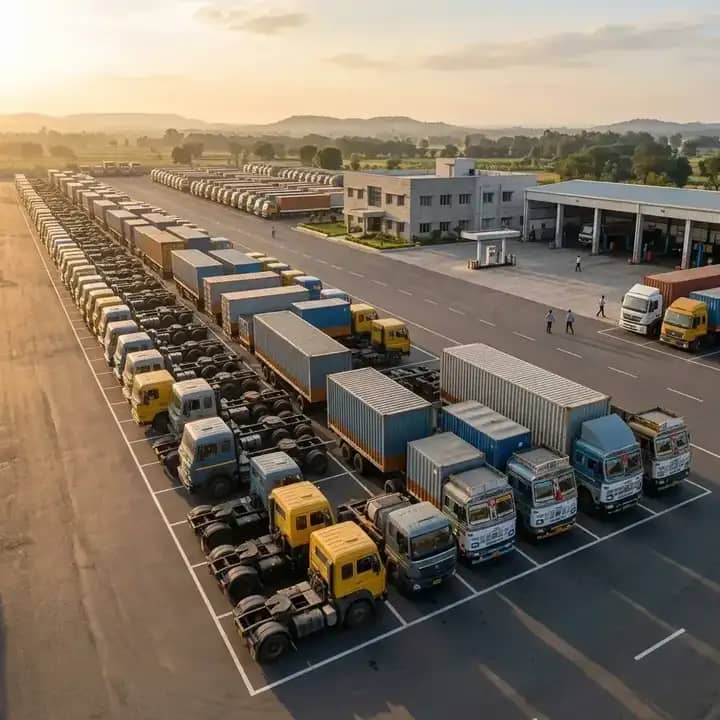
A truck parked in your yard still incurs fixed costs — financing EMIs, insurance premiums, and depreciation — without bringing in revenue. Improving fleet utilization (the percentage of time your trucks are actively moving freight) is the fastest way to increase profitability.
A live vehicle status board shows you instantly which trucks are running, available in the yard, or in the workshop. Your dispatch team can quickly assign free trucks for incoming loads rather than calling around or leaving vehicles idle.
- Clear status view for every truck: running, available, workshop
- Identify idle trucks in the yard that can take the next load
- Track cost-per-kilometre and net profit for every vehicle
- Make confident, data-backed decisions on buying new trucks

Understanding Total Cost of Ownership (TCO)
Document lapses — like expired permits, fitness certificates, or insurance policies — lead to heavy RTO fines and impounded trucks. Managing these documents on wall calendars or notebooks across a growing fleet is a recipe for missed deadlines.
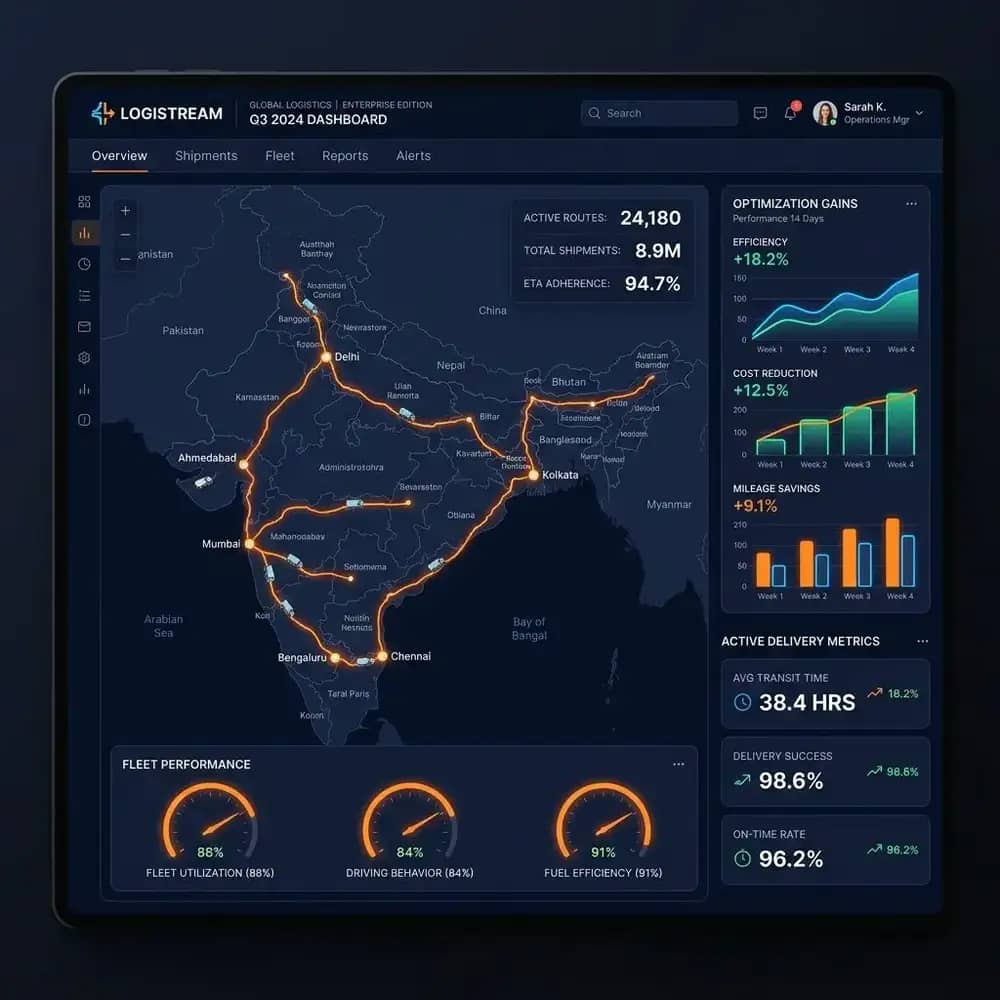
Bringing fuel receipts, repair bills, driver advances, and document fees together into a single dashboard gives you a clear Total Cost of Ownership (TCO) for each truck. You can easily spot whether an older vehicle is still profitable or quietly draining money through endless repairs. Explore more on our fleet owner solutions page.
- Digital document vault for insurance, permits, fitness, and PUC
- Automated WhatsApp and SMS reminders before renewal dates
- Eliminate RTO fines caused by missed document renewals
- Audit-ready maintenance and expense history for every vehicle
The Breakdown Nobody Saw Coming
Every fleet owner has a story like this one. A truck leaves for Delhi at 11 pm on a Monday, loaded with time-sensitive freight. At 3 am, halfway up a ghat section, the engine starts overheating. The oil was due for a change 1,200 km ago, but nobody remembered, and the maintenance book was in the office drawer. The driver pulls over, makes a few panicked calls, and waits on the highway shoulder until a mechanic arrives in the morning.
Count what that one breakdown cost. The towing, the repair, the missed delivery window, the client's angry call, a second vehicle dispatched to finish the job, and two days of lost earnings while the truck sat in the workshop. Almost every rupee of that was preventable. The oil change that got skipped would have cost a fraction of the towing bill. Preventive maintenance is not a luxury — it is the cheapest insurance a fleet can buy, and it works only when the reminder arrives before the breakdown, not after.
- A skipped oil change can cost 50x more in towing and lost earnings
- Scheduled servicing by kilometres, not by memory
- Reminders reach the right person before the deadline passes
- Workshop history builds a record you can actually trust
Turning Drivers Into Partners in Cost Control
Here is a truth that surprises owners: the person in the best position to control fuel and maintenance costs is the driver — the same person manual systems tend to distrust. A driver who knows the trip has a target fuel figure, and that his actual consumption is being tracked fairly, will drive differently. Gentle acceleration, less idling at halts, tyres kept at the right pressure — small habits that add up to serious savings across a year.
The way to get drivers on your side is not surveillance; it is transparency. When drivers see that the system treats them fairly — bonus for fuel-saving driving, protection against false claims, records that back them up in disputes — they become the strongest cost-control force in the fleet. A fleet where the driver is a partner saves more on fuel than any software feature alone ever could.
What the First 30 Days of Cost Tracking Look Like
The most exciting part of moving to digital cost tracking is what happens in the first month, when the data starts telling you things you suspected but never proved. Truck 12 is costing ₹6 per kilometre more than Truck 14 on the same route. Three vehicles in the Nagpur yard average 12% lower utilization than the rest. One driver's fuel consumption is consistently 15% above the fleet benchmark.
None of this is surprising in the sense of being new — the signs were always there. What is new is that it is now written down, quantified, and impossible to argue with. And what follows naturally is action: the under-performing truck gets inspected, the idle vehicles get reallocated, the driver gets a conversation instead of an accusation. Within a month, most owners recover more than the cost of the software from these first corrections alone.