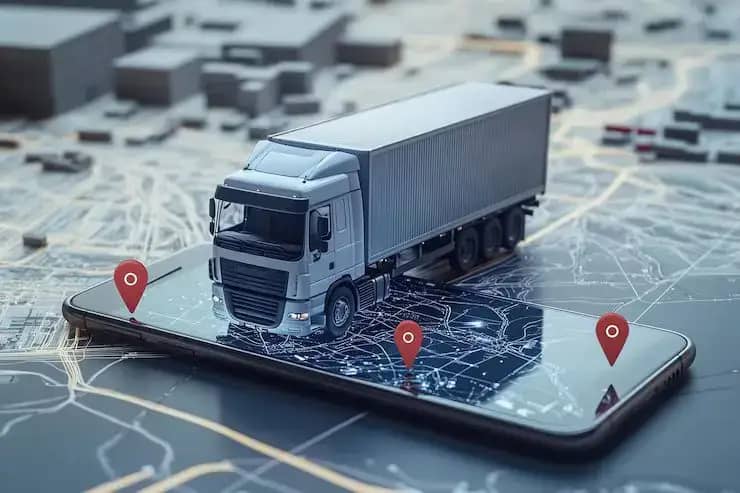
Live GPS tracking vs. calling drivers every two hours — how real-time location data keeps trucks moving and stops endless customer check-in calls.
The Daily Grind of Phone-Call Tracking
Anyone who has managed a fleet knows how exhausting traditional tracking can be. Your morning starts with dispatchers dialing drivers one by one. “Where are you? Have you crossed the toll? Why haven’t you reached the factory yet?” The driver replies while negotiating highway traffic, gives a rough location, and promises to call back later.
The problem is that phone updates are always behind schedule and impossible to verify. When a driver says he is 30 minutes away from the warehouse, he might actually be stuck two hours back in a highway jam or resting at a dhaba. Your dispatchers spend their whole day acting like human call centers instead of planning the next set of loads.


What Real-Time GPS Brings to Your Operations
Installing live GPS tracking changes the entire daily routine. Instead of calling drivers constantly, your dispatch desk opens a single live map screen showing every vehicle in your fleet. You can see exact locations, running speeds, and recent stops at a glance.
If a truck stops unexpectedly for more than 45 minutes or drifts off its assigned highway route, the system alerts your team immediately. You can catch delays, route detours, or mechanical trouble early while there is still time to help the driver, rather than finding out hours later when the client calls to complain.
- See your entire fleet live on a single map without phone calls
- Get instant alerts for long halts, route detours, and speeding
- Review complete route playback and halt logs for every completed trip
- Combine GPS mileage with fuel logs for accurate cost-per-km data
- Build driver trust with clear, undisputed trip records

Stopping Long Halts and Fuel Losses on the Road
On long national routes like Delhi-Mumbai or NH-44, unscheduled stops at remote dhabas or roadside points can lead to unexpected risks — such as unauthorized diesel siphoning or extended idling that wastes fuel. When tracking relies only on driver phone calls, these halts go completely unnoticed.
By setting up geofenced safe zones around approved dhabas, transport hubs, and fuel stations, your system can automatically flag any unapproved stop. If a vehicle halts outside designated zones, your fleet manager receives an alert on WhatsApp and can check in with the driver right away.
- Set up safe geofence zones for approved halt spots and fuel pumps
- Receive instant WhatsApp alerts for unapproved stops
- Cut down on excess engine idling that burns expensive diesel
- Protect valuable cargo and vehicle equipment while on the road
Knowing Your Exact Cost Per Kilometre
Raw GPS coordinates are useful, but their real value comes when you link them with your financial numbers. When your tracking system connects directly to your trip expense ledgers, you instantly see your true Cost Per Kilometre (CPK) for every vehicle and route.
If Truck A costs ₹32/km on the Pune-Bengaluru run while Truck B costs ₹27/km on the exact same lane with similar loads, you can immediately investigate the difference. Is it driver driving style, tire wear, or hidden idling? That insight lets you fix cost leaks before they eat up your monthly profit.
Making Smarter Business Decisions
Tracking is not just about keeping an eye on drivers — it is about making your transport business leaner and more profitable. Real-time availability views show you which trucks are idling in the yard waiting for loads, helping you pick up extra freight without buying new vehicles.
When you base your rates, route choices, and fleet maintenance on real operational data rather than guesswork, your business becomes much more resilient. FleetSetu works seamlessly with third-party GPS devices as well as OEM telematics; learn how it fits your fleet on our fleet owner solutions page.
What the Drivers Actually Think About It
Here is a surprise for most owners: the drivers usually like GPS tracking more than the management does. Think about how it feels to be on the other side of those phone calls. Every two hours a dispatcher calls and asks where you are, as if you are expected to remember every toll and milestone on a 1,200 km run. One delay and the office assumes the worst. A driver spends the whole trip feeling watched but never trusted.
GPS changes that relationship. Now the office can see the truck, so the driver is not constantly interrupted mid-turn to give updates. And because the system logs everything, a driver has proof of exactly what happened. When a customer wrongly blames the driver for a delay caused by a highway accident, the route playback shows the truth. Drivers who were sceptical on day one are usually the ones defending the tracking device by the end of the first month.
Picking a Tracking Setup That Fits Your Fleet
One of the most common questions owners ask is whether they have to throw away existing hardware and buy new devices. The answer is usually no. Modern fleet management software works with the tracking devices you already have — and with the telematics that come built into newer Tata, Leyland, and Eicher trucks — so the upgrade is mostly about what happens with the data, not about buying new boxes.
The practical advice is simple: start by wiring up the vehicles that run your most expensive routes, the ones where a missed delivery hurts the most. Get comfortable reading the live map and the route playback for those trucks first. Once your team sees the value, extending it to the rest of the fleet becomes an easy decision rather than a gamble.
- Works with existing third-party GPS devices — no forced hardware replacement
- OEM telematics from Tata FleetEdge, Leyland iALERT, and Eicher E-PASS connect directly
- Start with a handful of high-value routes and expand from there
- One dashboard to see GPS data, fuel logs, and expenses together
The Phone Call That Used to End Your Evening
Picture a familiar scene. It is 8 pm, you are at home with your family, and your phone rings. It is your biggest client. "Where is my truck? It was supposed to reach the factory by now and nobody is answering the driver." You do not know the answer. Your dispatcher does not know either. For the next hour everyone is calling around in the dark while the client grows angrier.
With live tracking, that call goes differently. You glance at the map on your phone, see the truck stuck in a jam 40 km before the factory, and you call the client back in thirty seconds: "The truck is on its way, it hit heavy traffic near the highway work stretch, and the revised ETA is 9:30 pm." No drama, no guessing, no burning anyone's evening. That single capability — answering a worried customer with facts — is worth more to your reputation than almost anything else tracking gives you.