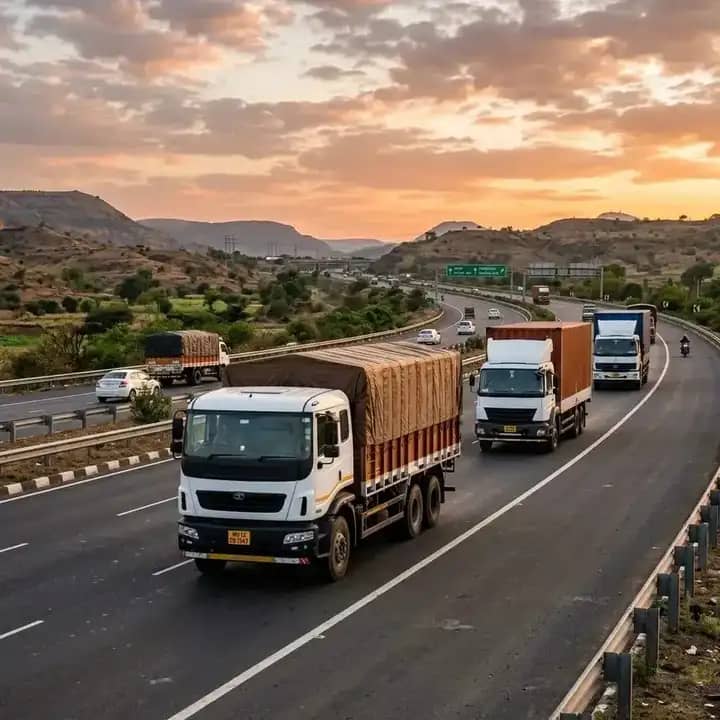
Transport management is the engine room of the Indian economy. Every truck movement involves a booking, a lorry receipt, a dispatch decision, a route, a set of tolls and fuel stops, and finally a freight bill. This guide explains how a transport management system (TMS) digitizes that entire chain — and how FleetSetu is built around the way transporters actually work.
What Transport Management Means
Transport management covers planning, executing, and settling freight movement. For a transporter this means finding loads, assigning vehicles and drivers, issuing lorry receipts, tracking the movement, collecting proof of delivery, and billing the customer.
The transport business is document-heavy. A single trip can generate an LR, an e-way bill, a trip sheet, fuel slips, toll receipts, and a freight invoice. When these documents live in different places — a register here, a WhatsApp photo there — reconciliation becomes the real cost of doing business. A transport management system keeps the whole chain in one place.
- Load planning and vehicle assignment
- LR / builty generation and numbering
- Dispatch and driver coordination
- In-transit tracking and milestone updates
- POD collection and freight billing
- E-way bill generation and management
Transport Planning and Load Booking
Planning decides profitability. The loads you accept, the rates you quote, and the vehicles you assign set the outcome of every trip. Good planning needs three things accurate: what freight is available, which vehicles are free, and what it actually costs to run a given route.
With FleetSetu, booking starts in a single screen. Consignor, consignee, goods, freight terms, and vehicle details are captured once, and the system generates a GST-ready, auto-numbered LR immediately. Availability views show which trucks are free so dispatchers book the right asset the first time.
- One-screen trip booking from phone or PC
- Vehicle availability at a glance
- Freight rate cards per route and customer
- Auto-numbered, GST-ready LR (builty) generation
Trip Management and Vehicle Assignment
A trip is the unit of work in transport: one vehicle, one driver, one set of documents, one cost ledger. When trips are tracked digitally, every expense — advance, fuel, toll, allowance — attaches to the trip it belongs to, and every revenue figure is traceable back to the same record.
FleetSetu assigns drivers and trucks to trips, disburses trip advances through the driver ledger, and keeps the trip sheet current as milestones complete. Nothing lives in a notebook anymore, and the month-end does not require rebuilding every trip from memory.
- Trip lifecycle from booking to settlement
- Vehicle and driver assignment per trip
- Driver advance and allowance ledger tied to the trip
- Trip-level profit and loss
Dispatch and Driver Coordination
Dispatch is coordination under pressure: available vehicles, rested drivers, customer promises, and the occasional last-minute change. In a manual operation, most of a dispatcher’s day goes into phone calls and chasing status updates rather than planning.
FleetSetu centralizes dispatch on a control tower where dispatchers see available trucks, assigned drivers, and pending loads. Tracking links and milestone notifications reduce status calls, and an AI-assisted dispatch engine can recommend assignments based on your own operating procedures — while the human keeps the final call. See how AI helps dispatch planning.
- Dispatch dashboard with live vehicle status
- Driver coordination via app and WhatsApp
- Automated milestone notifications
- SOP-aware dispatch recommendations
Shipment Tracking and Delivery Operations
Customers no longer accept “I will call you when it reaches.” They expect a live view of their shipment. FleetSetu shares GPS tracking links over WhatsApp and updates milestones automatically — booked, LR generated, picked up, in transit, reached hub, out for delivery, delivered — so the customer is never left guessing.
At delivery, drivers capture proof of delivery (e-POD) with a photo and timestamp straight from the field. The POD lands in the operations workflow instantly, where it is verified and attached to the invoice. Delivery confirmation is no longer a phone call; it is a record.
- Live tracking links shared with customers
- Automatic milestone updates
- Mobile e-POD capture and verification
- Faster invoice generation on confirmed delivery
Documentation: LR, E-Way Bill, and POD
Documents are the currency of transport. The LR proves the contract, the e-way bill satisfies the taxman, and the POD proves delivery. When all three are generated and stored digitally from the same trip record, there is no re-keying and no lost paper.
FleetSetu integrates directly with GSTN for one-click e-way bill generation and extension, so the separate portal login disappears from the workflow. Every trip carries a complete digital trail — LR, e-way bill, tracking log, POD, and invoice — which protects the transporter in disputes and audits. Read more about digital LR generation.
- GST-ready LR in A4 or thermal format
- One-click e-way bill generation and extension
- Digital POD repository per trip
- Searchable records for disputes and audits
Billing, Freight Collection, and Customer Communication
In transport, cash flow follows paperwork. The freight bill cannot be raised until the POD is verified, and payment follows the bill. Transporters who digitize LR and POD generation consistently shorten their billing cycle from weeks to days, because the invoice is generated the moment delivery is confirmed.
FleetSetu compiles trip charges, detention fees, and extra halts into a GST invoice automatically and shares it on WhatsApp. Payment reminders go out the same way. Customers stay informed, and the transporter gets paid faster without chasing documents.
- Automatic GST freight invoicing
- Detention and extra-halt charges included
- Bills and reminders shared via WhatsApp
- Payment tracking per customer
Reporting and Automation
A transport business that records every trip digitally can finally answer the questions that matter: which routes are profitable, which customers pay on time, which vehicles cost more than they earn, and which drivers burn more fuel than the benchmark.
FleetSetu produces transport profit-and-loss reports per truck, per branch, and for the whole business — automatically, from data already captured. Automation handles the repetitive coordination, so a small dispatch team can run a much larger fleet.
- Route-wise and customer-wise profitability
- Fuel and expense variance reports
- On-time performance tracking
- Automated document, milestone, and reminder workflows
How FleetSetu Simplifies Transport Management
FleetSetu’s Transport Management Software is designed for the way Indian transporters operate — from single-branch operators to multi-branch networks. Booking, LR generation, dispatch, tracking, POD, billing, and driver advances flow through one system, with WhatsApp as the connective tissue that drivers and customers already use.
Transporter-focused solutions cover the full daily operation, while SMB fleets get the same workflow in a simpler, more affordable form. Whichever fits, the change is the same: less re-keying, fewer disputes, faster billing, and an operation you can manage from a phone.
- Start with the highest-friction process: LR and billing
- Digitize dispatch and driver advances next
- Let tracking links replace status calls
- Use transport P&L reports to steer pricing and routes
One Trip, From Booking to Settlement
It helps to follow a single trip through the whole transport chain, the way a real business runs it. A garment factory in Tirupur calls with a load for Delhi. In a manual operation, the booking clerk notes the details, issues a carbon-copy LR, and calls around for a return-load truck. The driver gets cash for diesel and tolls. For the next four days, everyone tracks the truck by phone. When the truck finally unloads, the signed POD travels back in the cabin. Ten days later, the accounts team raises an invoice from the same handwritten numbers.
Now run the same trip on a transport management system. The booking happens once, and the LR is generated instantly with the correct GSTIN. The system shows which truck is free and assigns it. The driver's advance is recorded against the trip, tracking links go out to the customer automatically, and the e-way bill is filed from the same entry. The moment the POD is captured on a phone at the Delhi dock, the invoice is generated and sent. From booking to billing, every step drew on the same single record — which is exactly why nothing was lost or re-typed along the way. That is the whole difference in a nutshell: one record, used many times, instead of the same information typed six times.
Why Change Feels Hard (and Why It Does Not Stay Hard)
Let us be honest about the resistance. When you first suggest a TMS, expect your booking staff to say the system is slow, the drivers to say the phones are too complicated, and at least one senior clerk to quietly hope the whole thing fails so the registers come back. None of this means you are doing something wrong. It means the office has spent years building habits around paper, and habits are stubborn.
The resistance has a surprisingly short shelf life, and the reason is simple: the digital way is genuinely easier. Once a clerk sees that a GST-ready LR takes thirty seconds instead of fifteen minutes, the carbon booklets start to look like relics. Once a driver sees his advance credited the moment it is handed out, the old diary system stops appealing. The people who fought the change on Monday are usually the ones defending it by Friday — not because they were convinced by any presentation, but because they experienced the difference themselves. Give your team two weeks of real usage before you judge the rollout.
The Habits That Make Digital Transport Work
Software alone does not transform a transport business; habits do. The first habit is discipline at the point of booking — every trip enters the system when it is booked, not at the end of the day when memory has already faded. A trip entered late is a trip with missing expenses, and missing expenses are exactly the leak you were trying to plug.
The second habit is settling trips promptly. When a truck returns, close its trip sheet the same day — match advances, receipts, and revenue while the facts are fresh. The third habit is the weekly review: ten minutes to look at the P&L per truck and ask why one vehicle is profitable and another is not. These three habits — book it now, settle it today, review it weekly — matter more than any feature in the software. Transporters who adopt them report that the system changes their business; the ones who do not adopt them wonder why the system changed nothing.
- Book every trip into the system the moment it is taken
- Close trip sheets the same day the truck returns
- Review vehicle P&L weekly and question the outliers
- Let the system remind you — never rely on memory for documents