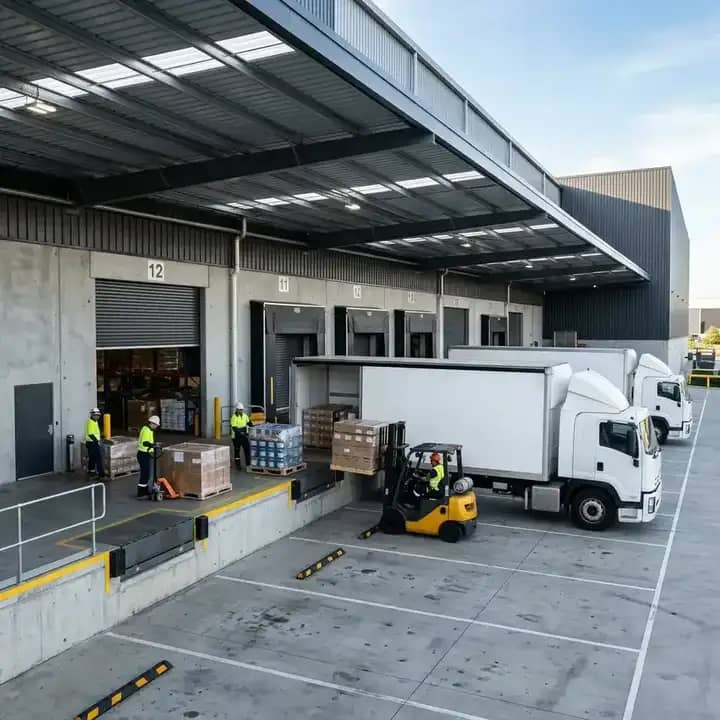
FMCG Distributor Achieves 98.4% On-Time Delivery Across Strict SLA Windows
An FMCG distribution network digitized load indents, carrier reverse bidding, and live milestone tracking to eliminate retailer SLA penalties and automate carrier bill auditing.
The Challenge
Managing daily dispatches to over 850 retail chains, supermarkets, and wholesale hubs across North India, this FMCG distributor operated under strict 4-hour delivery SLA windows. Missing a delivery slot resulted in severe financial penalty deductions, warehouse dock rejections, and damaged retailer relationships.
Because dispatches relied on third-party market vehicles and dedicated hired carriers, dispatchers lacked visibility once trucks left the central warehouse. Highway delays, breakdown halts, or dock congestion surfaced only after retail buyers levied late delivery penalties against monthly vendor payments.
To feel the pressure, sit in the dispatch office on a busy Thursday. Eleven trucks are being loaded for deliveries that must land inside four-hour windows — morning slots that close at 10 am, afternoon slots that close at 4 pm. One truck is delayed at the loading bay, and a customer on the route has already called twice asking whether the vehicle has left. The dispatcher’s phone rings constantly, each call adding a little more tension. In this world, a fifteen-minute delay at the dock can cascade into a missed window, a penalty, and a bruised relationship with a retailer who controls a lot of monthly volume.
The Existing Process
Load indents were placed over phone calls and WhatsApp groups with a loose network of local transport brokers. Freight rates fluctuated daily based on verbal negotiations, with no central rate card enforcement or historical price tracking.
Tracking consisted of dispatchers making manual check-in phone calls to drivers throughout the day. Freight invoices submitted by hired carriers were processed manually against paper delivery slips, making it nearly impossible to detect overbilling, rate inflation, or unauthorized detention charges.
The brokers loved this arrangement, and not for the reasons the company did. Without a central record of rates, a broker could quote high on a tight day and nobody could prove it was above the norm; historical prices lived in no one’s memory. And the delivery slips carriers submitted — the only evidence of what actually happened — were handwritten, illegible in places, and impossible to reconcile at scale. When a carrier claimed extra detention hours, the distributor had no way to verify or dispute it. Every month, money walked out the door that a little record-keeping would have kept.
The Problems
- Frequent missed retail delivery windows resulting in heavy financial penalty deductions from monthly invoices
- Carrier freight rates deviating significantly from agreed contract rate cards during peak demand cycles
- Operations team caught completely off-guard by transit delays, unable to alert retail receiving docks in advance
- Manual freight bill auditing taking weeks and allowing unapproved detention fees and rate markups to pass through
- Complete lack of historical carrier performance metrics to evaluate vendor reliability and service quality
- Verbal rate negotiations with brokers left no historical record, so every peak-season quote could be inflated with impunity
- No metric existed to tell which carriers were reliable and which were quietly costing the network money in penalties and delays
The FleetSetu Solution
The company deployed FleetSetu B2B Logistics Software as a centralized logistics control tower. Dispatchers now broadcast load indents to verified carriers through a unified portal, enabling transparent reverse bidding while automatically enforcing contracted rate caps.
Automated milestone tracking monitors active shipments in real time against scheduled SLA delivery slots. If a truck encounters unexpected delays, FleetSetu issues early warning alerts to dispatchers, allowing them to proactively notify retail receiving docks. Carrier freight bills are automatically audited against agreed contract rate cards before payment approval.
The result was a dispatch desk that finally knew what it was doing. Instead of calling brokers and hoping, the team posted indents and watched competitive bids arrive. Instead of discovering delays by phone, they saw them flagged on the screen while there was still time to call the receiving dock. The change was not dramatic technology — it was that decisions which used to run on memory and phone calls now ran on visible, verifiable information. As one dispatcher put it, it felt like driving with headlights on for the first time.
The Implementation
Implementation began with configuring customer SLA delivery windows, contract rate cards, and carrier profiles in the FleetSetu central portal. Over 25 regular transport vendors were onboarded to the bidding portal during a two-week transition window.
The central dispatch team at the primary warehouse adopted the control tower dashboard to manage active shipments, while receiving managers at regional distribution hubs were granted read-only access to monitor inbound truck ETAs live.
The rollout had one awkward week while brokers got used to the bidding portal — some preferred the old phone calls and the old margins. The distributor held firm, and within a fortnight the same brokers were the ones reminding each other to bid early. Inside the warehouse, receiving managers who were given live visibility of inbound ETAs stopped calling the dispatch desk entirely. The quietest signal of success came at the end of the second month, when the finance team simply asked when the system could cover more lanes — no one needed to convince them of anything.
This is an anonymized, illustrative example based on common FleetSetu customer workflows. Customer names and details have been changed to protect confidentiality.