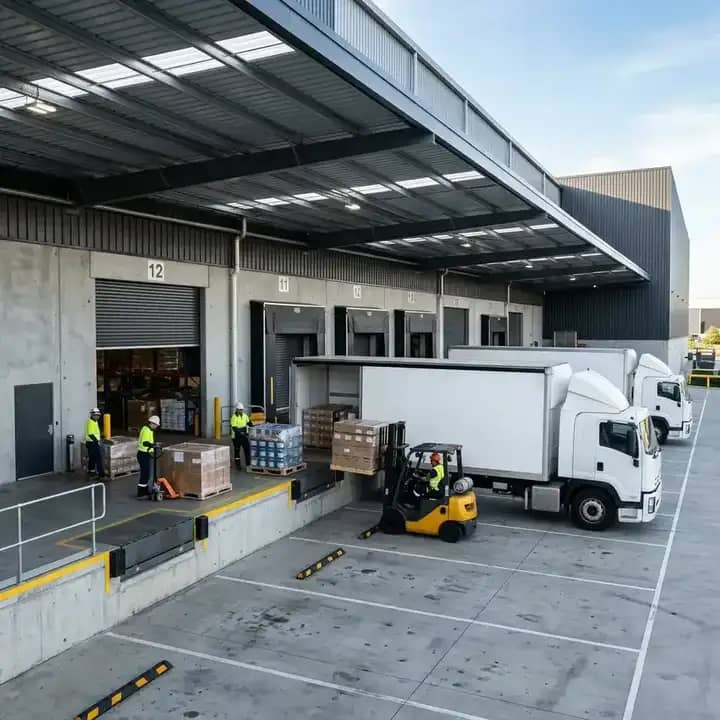
B2B logistics is more demanding than B2C delivery. There are no single parcels — there are pallets, purchase orders, contract rates, agreed delivery windows, and service-level agreements with penalties. This guide covers how enterprises keep B2B logistics reliable and profitable, and how FleetSetu supports shippers, distributors, and logistics providers in doing it.
What B2B Logistics Means
B2B logistics moves goods between businesses: from factories to distributors, distributors to retailers, and suppliers to manufacturers. Unlike B2C delivery, B2B shipments are freight-heavy, scheduled, and governed by contracts with agreed rates and service levels.
The stakes are high because B2B failures ripple through the supply chain. A missed delivery window can stop a retailer’s shelves from being stocked or a factory’s production line. Reliability is not a nice-to-have — it is the product.
- Factory and warehouse dispatch management
- Multi-drop route planning
- Carrier and vendor coordination
- SLA delivery windows
- Freight bill audit and reconciliation
- Proof of delivery management
The Challenges of B2B Logistics
B2B operations juggle multiple vendors, multiple delivery locations, and multiple rate agreements at the same time. A single dispatch may involve several drops, each with its own window, receiving process, and documentation requirement.
Without a system, coordination happens through calls and spreadsheets. Carriers are booked by memory, rates are checked in old email threads, and delivery exceptions surface only when a customer complains. Every manual step introduces both cost and risk.
- Multiple carriers with separate contracts and rates
- Consignments that cross hubs and warehouses
- Strict SLA windows with penalty clauses
- Reverse logistics and returns
- Freight costs spread across many small shipments
Shipment Management and Order-to-Delivery Workflows
Every B2B shipment follows the same arc: order received, load planned, vehicle assigned, goods dispatched, delivery confirmed, invoice raised. The businesses that run this arc consistently are the ones that standardize it as a workflow instead of improvising each time.
FleetSetu’s B2B logistics platform turns the arc into milestones. Orders sync from your ERP, dispatches are created against them, and every status change — pickup, transit, arrival, delivery — updates automatically and notifies the customer.
- ERP order ingestion into dispatch
- Consignment tracking from booking to POD
- Standard milestones with automatic updates
- Exception alerts before the customer raises them
Transport Coordination and Dispatch Management
Dispatch is where B2B promises meet reality. Loads need vehicles, vehicles need carriers, and carriers need clear instructions. When dispatch is spread across calls and spreadsheets, the same shipment gets discussed multiple times before it moves.
FleetSetu coordinates hired transporters through indents and carrier reverse bidding: dispatchers broadcast a load, approved transporters bid, and the best rate is selected with a full audit trail. Every assignment is at the agreed rate, and nothing is booked by memory — see the B2B logistics solution.
- Indent broadcast to approved transporters
- Carrier rate bidding and selection
- Contract rate card enforcement
- Dispatch dashboard for all active loads
Tracking and Visibility
Visibility is the first pillar of B2B logistics. Both the enterprise and its customers need to know where a shipment is at every moment without asking anyone. Automated tracking and self-service links turn logistics from a mystery into a status report.
FleetSetu gives shippers live tracking for owned and hired fleets, and gives customers a white-labeled tracking experience where appropriate. Delays are flagged by the system — a vehicle off-route, a halt too long — before they become missed windows.
- Live GPS tracking across owned and hired fleets
- SLA window monitoring with early warning alerts
- White-labeled customer tracking pages
- Route and halt history per shipment
Customer Communication and SLA Management
SLA penalties are the teeth behind B2B delivery promises. Retailers and manufacturers agree on unloading windows, and missing one can trigger fines that erase the margin on an entire truck. Managing windows by spreadsheet is a bet you will eventually lose.
FleetSetu’s SLA slot booking and appointment engine schedules loading and unloading slots, monitors deliveries against their windows, and alerts dispatchers to at-risk shipments early enough to act. Customers get milestone updates automatically, so communication is proactive instead of reactive.
- Loading and unloading slot scheduling
- Real-time ETA against agreed windows
- Early warning for at-risk deliveries
- Automated customer updates at every milestone
Billing, Documentation, and Freight Audit
In B2B logistics, money is lost twice: once when freight bills overcharge you, and again when slow paperwork delays your own invoicing. Freight overcharging against agreed contract rates is one of the most common — and most preventable — sources of leakage.
FleetSetu audits every carrier freight bill against the agreed rate card before payment is released, and attaches verified e-PODs to customer invoices automatically. Shortages and damages are captured digitally at unloading, so claims are resolved from evidence instead of argument. The result is a faster order-to-cash cycle and no unapproved freight spend.
- Automated freight invoice audit against contract rates
- Digital shortage and damage e-POD capture
- POD-linked customer invoicing
- Clean claims trail for disputes
Operational Efficiency and Scaling
B2B logistics scales only when it is standardized. The teams that handle more volume without adding chaos are the ones whose processes — order intake, dispatch, tracking, billing — run on one system with clear ownership.
FleetSetu supports that growth with a multi-branch control tower for logistics providers, ERP integration so orders flow without re-keying, and vendor performance scorecards that make carrier negotiations evidence-based. When operations are visible, capacity planning stops being guesswork.
- Multi-branch and multi-hub visibility
- ERP and accounting system integration
- Vendor performance scorecards
- Reports that scale with the business
How FleetSetu Supports B2B Logistics
FleetSetu connects the whole B2B logistics chain on one platform: B2B logistics software for shippers and enterprises managing hired carriers, logistics management software for 3PLs running multi-branch networks, and transport management software for the transporters who execute the movement.
For warehouse-bound flows, the warehouse management software keeps bin-level stock and pick-pack operations accurate on the inbound side. Whether you ship from a factory, coordinate hired fleets, or run a freight network, the same principle applies: standardize the workflow, automate the updates, and audit every rupee.
- Start with shipment milestones and tracking links
- Enforce contract rates with automated freight audit
- Use vendor scorecards to negotiate better rates
- Close the loop with POD-driven billing
A Week in the Life of a B2B Logistics Manager
Spend a week inside the head of a B2B logistics manager and you will see why this role is so demanding. Monday opens with a dozen orders from the sales team that all need vehicles by Thursday. Tuesday brings a call from a regional warehouse — a truck from last Friday's dispatch still has no confirmed delivery, and the customer is asking. Wednesday is the day three carrier invoices land, each one slightly higher than the last time the same lane was run, and nobody has the energy to challenge all three. By Friday, the manager is juggling a penalty-threatening SLA delivery and a vendor dispute, wondering where the month went.
None of these problems are dramatic on their own. That is the point — B2B logistics is worn down by a thousand small inefficiencies, not one big failure. The manager who wins is the one who removes the friction systematically: orders that flow in digitally, deliveries that report themselves, bills that audit themselves. When the weekly routine stops being firefighting and starts being monitoring, the same manager suddenly has time to do the actual job — negotiating better rates, planning smarter loads, and growing the network. The role does not get easier; the busywork disappears, which feels exactly the same.
The Real Cost of Doing It the Old Way
Every B2B operation that runs on spreadsheets and phone calls carries a hidden price tag, and it is rarely the one you would guess. The visible costs — the SLA penalties, the overcharged freight bills — are the tip. The larger cost is the margin you silently lose on routine decisions: a carrier chosen by memory instead of price, a detention charge never challenged, a delayed dispatch that forces an emergency (and expensive) express delivery.
Then there is the cost nobody budgets for: the time of your best people. A logistics manager earning a serious salary spends hours each week re-typing orders, chasing statuses, and auditing bills by hand — work that a system does in seconds. When you add that up over a year, the "free" manual process turns out to be the most expensive thing in the operation. Digitization is not an extra cost; it is the cheapest way to recover the money your old process is leaking every single week.
Start With One Lane, One Contract, One Metric
B2B logistics teams often stall because they try to digitize everything at once. The smarter way is to prove the value on a small, controlled piece of the operation. Pick your highest-volume lane — the one that runs every day with several carriers. Put its rate card into the system. Track its shipments with milestones. Audit its freight bills automatically. That single lane will give you your first measurable win within a month: a rate leak found, a penalty avoided, a tracking complaint answered instantly.
Once that lane shows results, the next lane is easy — and the finance team will be asking for the expansion before you suggest it. The same logic applies to metrics: do not track everything from day one. Start with one number that matters, usually on-time delivery or freight cost as a share of revenue, and watch it improve as the process cleans up. A business that improves one lane and one metric every month is a business that will be unrecognizable in a year.
- Pick your highest-volume lane and digitize it completely first
- Enforce its rate card and audit every freight bill on that lane
- Track shipments to milestones so delays show up early
- Expand lane by lane, letting early wins fund the momentum